The Art of Pattern Mixing: Layering Prints with Confidence This Autumn

Poppy Love • September 16, 2026

As September settles in and Surrey gardens turn from green to gold, many of our clients feel the pull towards richer, more layered interiors. There is something about the shift into autumn that makes us crave depth in our homes, and pattern mixing is one of the quickest ways to bring that warmth and personality to your windows. Done well, it looks effortless. Done badly, it can feel chaotic; so here's how to get it right.

Start With a Common Thread

The secret to successful pattern mixing isn't matching, it's connecting. Every pattern in a scheme should share something with its neighbours, whether that's a colour, a tone, or a common thread of texture.

A client in Fleet recently paired a soft ochre floral Roman blind with striped cushions in the same warm mustard tone. The patterns were entirely different in scale and style, but because they shared that autumnal ochre, the room felt curated rather than cluttered.

Play With Scale, Not Just Style

One of the easiest ways to combine patterns confidently is to vary their scale deliberately.

  • Large-scale prints, bold botanicals or oversized checks, work beautifully as a statement, such as a pair of interlined curtains.
  • Medium patterns such as stripes, ticking, small geometrics, sit comfortably alongside as a supporting layer.
  • Fine textures including subtle weaves, herringbone and boucle ground the scheme and stop it feeling too busy.

Think of it like an orchestra: one bold voice, a few supporting instruments, and a steady rhythm underneath.

Let Texture Do Some of the Work

Not every "pattern" needs to be a print. As the weather cools, texture becomes just as important as colour or motif for creating that layered, cosy feel.

A tweed Roman blind against a smooth linen curtain, or a chunky boucle cushion beside a crisp cotton print, adds visual interest without introducing another competing pattern. This is particularly effective in Berkshire homes with more pared-back, neutral palettes, where texture becomes the main event.

Our Favourite Fabric Pairings for Autumn

  • Ticking stripe curtains with a botanical print blind
  • Herringbone wool blend paired with a soft paisley
  • Plain velvet curtains with a checked or tartan cushion
  • Subtle damask alongside a fine corduroy

Anchor the Scheme With One Dominant Pattern

Every confidently mixed room has a hero. Choose one pattern, usually the largest or boldest, to lead, and let everything else support it quietly.

For a recent project in Camberley, we made curtains in a rich, autumnal floral linen for a bay window. The client then chose a simple check for the window seat cushions and a plain wool throw for the sofa. The floral led; everything else followed its colour cues without competing for attention.

Don't Forget the Solids

Plain fabrics are pattern mixing's unsung hero. A block of solid colour in a blind, a cushion, or even the curtain lining, gives the eye somewhere to rest between busier prints.

Interlined curtains in a warm plain velvet, for instance, can beautifully offset a patterned Roman blind on the same window, creating layers without overwhelming the space. This layered approach is especially popular for living rooms and dining rooms across Hampshire as the evenings draw in.

Trust Your Eye And Ask for Swatches

The best way to know if patterns work together is to see the actual fabrics side by side, in your own room's light. What looks harmonious in a showroom can shift entirely under the soft, low autumn sun through a Surrey window.

We always encourage clients to gather swatches and live with them for a few days before committing. Explore our fabric collections and request samples so you can see exactly how each texture and print behaves in your space.

Bring It All Together

Pattern mixing isn't about following strict rules, it's about building a scheme with rhythm, restraint and a confident hero fabric. With the right combination of scale, texture and colour, your curtains and blinds can add real depth to your home this autumn.

At Poppy Love, every curtain and blind is handmade and bespoke, so we can help you test, refine and perfect your pattern combinations before a single stitch is cut. Book a home consultation and let's explore fabrics and designs tailored to your space, wherever you are in Camberley, Surrey, Hampshire or Berkshire.
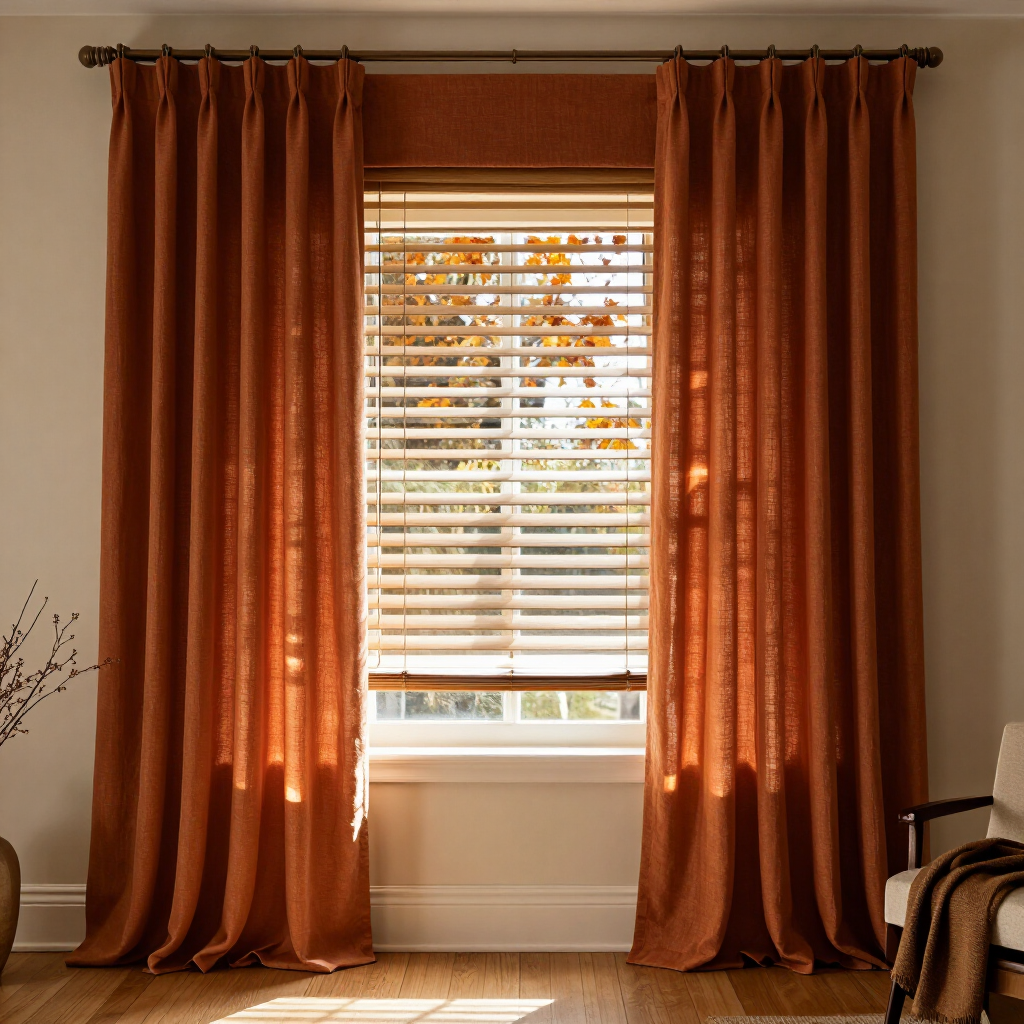
Rust-colored curtains framing a window with white blinds and autumn trees outside
By Kim Young • October 14, 2026
As the evenings draw in and the trees change to copper and gold, our thoughts naturally turn to making our homes feel warmer and more enveloping. One of the most effective ways to do this is through layering your window dressings, combining curtains, blinds and pelmets to create depth, richness and a sense of occasion that a single treatment simply can't achieve. Why Layer for Autumn? A layered window isn't just about looks; it's about function too. Autumn brings cooler mornings, unpredictable light and draughtier evenings, and layering gives you far greater control over all three. Warmth: an extra layer of fabric traps air and reduces heat loss through glass. Light control: a blind can filter low autumn sun without sacrificing privacy. Visual richness: combining textures adds a tailored, finished look no single curtain or blind can match. For period homes across Farnham, Odiham and Hartley Wintney, layering also respects the architecture; dressing a window properly, the way it was originally intended to be dressed. Starting with the Base Layer: Blinds. The foundation of a beautifully layered window is usually a well-fitted blind. A Roman blind in a warm wool-mix or textured linen sits neatly within the recess, offering precise control of light and privacy day to day. Choose tonal, muted shades this season. Rust, ochre, moss and deep terracotta all work beautifully against the low golden light of autumn afternoons. A recent client in Fleet chose a soft burnt-orange herringbone Roman blind for her study, which now glows beautifully whenever the afternoon sun streams through. Adding Curtains for Depth and Drama. Once the blind is in place, curtains bring softness, movement and a sense of luxury. Full-length, interlined curtains in a heavier fabric, think brushed cotton, wool blends or a lush velvet. These fabrics add real substance to a room as the temperatures drop. Fabric ideas for autumn curtains: Deep-pile velvet in aubergine, bottle green or burnt sienna Textured wool or bouclé for a tactile, cosy finish Warm-toned linen union for a softer, more relaxed layer Interlining is particularly worth considering this time of year. It doesn't just improve the drape and weight of a curtain, it also adds an extra thermal barrier against chilly window glass. The Finishing Touch: Pelmets. A pelmet is the detail that elevates a layered window from lovely to truly polished. It conceals the curtain heading and blind mechanism, creates a clean line across the top of the window, and adds an architectural finish that feels bespoke rather than off-the-peg. For a Camberley client with tall Victorian sash windows, we designed a box pelmet upholstered in a deep forest-green wool, edged with a subtle contrast braid. Paired with ivory Roman blinds and curtains in a complementary check, the result felt considered, warm and entirely tailored to the room. Pelmets work particularly well where: You want to hide curtain poles or blind headrails for a neater finish The window is a focal point deserving of extra detail You're working with high ceilings that benefit from a strong horizontal line Coordinating Without Overcomplicating. Layering doesn't mean everything needs to match exactly. In fact, the most elegant schemes rely on subtle contrast. Pair a plain blind with a patterned curtain, or a bold pelmet fabric with simpler curtains beneath. The key is choosing colours from the same palette so each layer feels connected rather than competing. A good rule of thumb: pick one dominant tone, one supporting neutral, and one textural accent, then let each window dressing take on a different role within that palette. Why Layering Suits Bespoke Homes. Layered window dressings are rarely off-the-shelf. Getting the proportions, headings and finishes right so the blind sits neatly behind the curtain, and the pelmet is scaled correctly to the window; This takes careful measuring and a practised eye. This is exactly where a bespoke, handmade approach makes all the difference, rather than relying on standard sizes that rarely fit period or characterful windows precisely. Ready to Layer Your Windows for Autumn? Layering curtains, blinds and pelmets is one of the most rewarding ways to bring warmth, texture and craftsmanship into your home this autumn. At Poppy Love, every layer is handmade and made-to-measure, designed to work together beautifully in homes across Camberley, Surrey, Hampshire and Berkshire. Book a home consultation and let's explore how layered window dressings could transform your rooms this season.
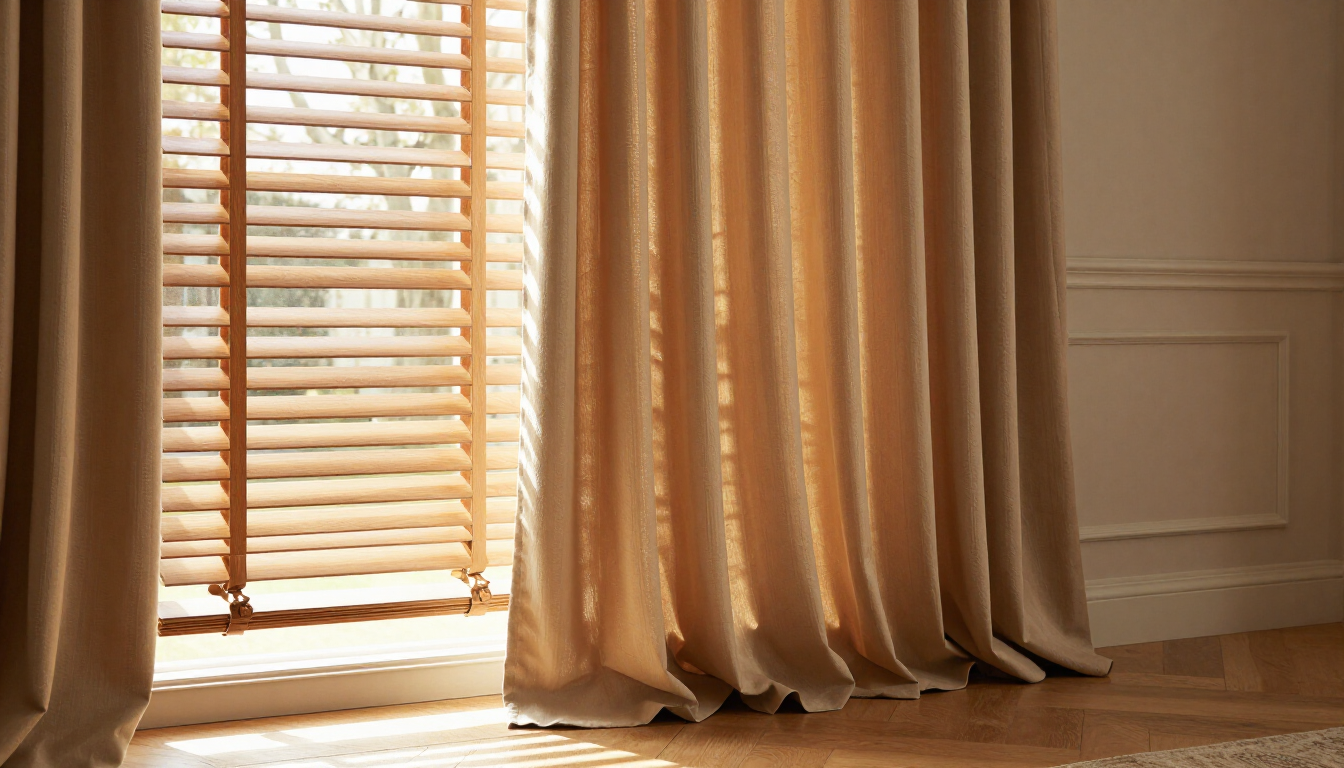
Sunlit window with wooden blinds and beige curtains in a room
By Kim Young • August 19, 2026
No two rooms ask the same thing of their windows. Discover how to choose the right curtains and blinds for every room in your home, from bedrooms to kitchens.
More Posts