Poppy Love: The Art of Pattern Mixing for Spring Window Dressings

Kim Young • March 19, 2026

Spring is the season of renewal, and there is no better time to be bold with your interiors. If mixing patterns across curtains, blinds and soft furnishings has always felt a little daunting, you are certainly not alone; but done well, it is one of the most sophisticated looks you can create. At Poppy Love, we help homeowners across Camberley, Surrey, Hampshire and Berkshire achieve beautifully layered windows that feel curated, not chaotic.

Why the Window Is the Perfect Canvas

A wooden window frame with green curtains, a small vase, and a decorative object on the sill, overlooking a garden.

The window is a natural focal point in any room, and the ideal place for pattern to stand out. Layering a patterned curtain with a plain or subtly textured blind creates depth and visual interest that a single fabric simply cannot achieve on its own.

The key lies in understanding scale, colour and rhythm — and that's exactly where bespoke, handmade window dressings come into their own.

Begin with a Hero Fabric

A rustic wooden table draped with a patterned fabric featuring muted orange flowers and sage green leaves.

Every successful pattern mix starts with one dominant print. This spring, generous botanical motifs are leading the way — loose florals, leaf prints and organic shapes in soft sage, warm terracotta or dusty blush are all feeling wonderfully fresh and current.


Choose your hero fabric to reflect the mood of the room: light and airy for a kitchen or dining space, or more layered and enveloping for a bedroom. Let everything else flow from there.

Layer in a Secondary Pattern

Green botanical print fabric and striped fabric pieces with scissors, a measuring tape, and a tag on a wooden table.

Once your hero fabric is set, a secondary pattern adds texture without competing. A classic narrow stripe or small-scale geometric in a complementary colourway works beautifully alongside a botanical print.


The golden rule: pull at least two colours from the dominant fabric and echo them in the secondary. We recently helped a client in Fleet pair a sage linen botanical curtain with a ticking stripe Roman blind, effortlessly fresh and full of spring character.

Think About Scale and Contrast

Abstract print curtains next to a window with a checkered Roman blind, a window seat, a cushion, and a folded throw.

One of the most common pattern-mixing pitfalls is combining two prints of a similar scale — they end up competing rather than complementing. Aim for clear contrast: large and small, bold and subtle, graphic and organic.


Think of it like an interior design duet. A large floral alongside a fine geometric is like a cello and a violin — distinct, yet completely harmonious.

Spring's Most Beautiful Pattern Pairings

A flat-lay of textured fabrics in sage, coral, and cream, accompanied by a spool of thread, buttons, and sewing scissors.

Here are some combinations that feel particularly beautiful right now:


  • Botanical & stripe — a timeless pairing; a loose-leaf print with a fine linen stripe never fails.
  • Abstract & check — a painterly abstract curtain with a soft gingham blind feel modern yet warm.
  • Floral & plain weave — sometimes texture is the finest companion; a slubbed linen or boucle alongside a floral creates tactile contrast without visual noise.

Colour Is the Connecting Thread

Colour is what ties every pattern together. For spring 2026, we are seeing a beautiful palette of warm naturals — ecru, soft coral, sage, dusty lilac and warm white flowing through interiors from Camberley to Basingstoke.


When mixing patterns, aim to work within a palette of three colours maximum. This brings cohesion without monotony and ensures the eye moves naturally and comfortably around the room.

Why Bespoke Makes All the Difference

Pattern mixing is an area where made-to-measure window dressings genuinely excel. Off-the-shelf curtains rarely sit with patterns centred and balanced — simply because they aren't designed that way.


With handmade curtains and blinds from Poppy Love, every panel is cut and sewn to position the pattern exactly where it belongs. That level of considered craftsmanship is what elevates a good window treatment to a truly beautiful one.


Spring is a wonderful time to be brave with pattern and colour — and with the right guidance, the results can be genuinely transforming. Whether you are drawn to a single statement fabric or a carefully considered layered mix, Poppy Love's bespoke curtains and handmade blinds are crafted with the care and precision your home deserves.


Arrange a home consultation and let us help you discover the perfect pattern combination for your space. Explore our curtain and blind collections or get in touch to start the conversation. Take a look at our website to find out more about us www.poppylove.co.uk

Contact Us
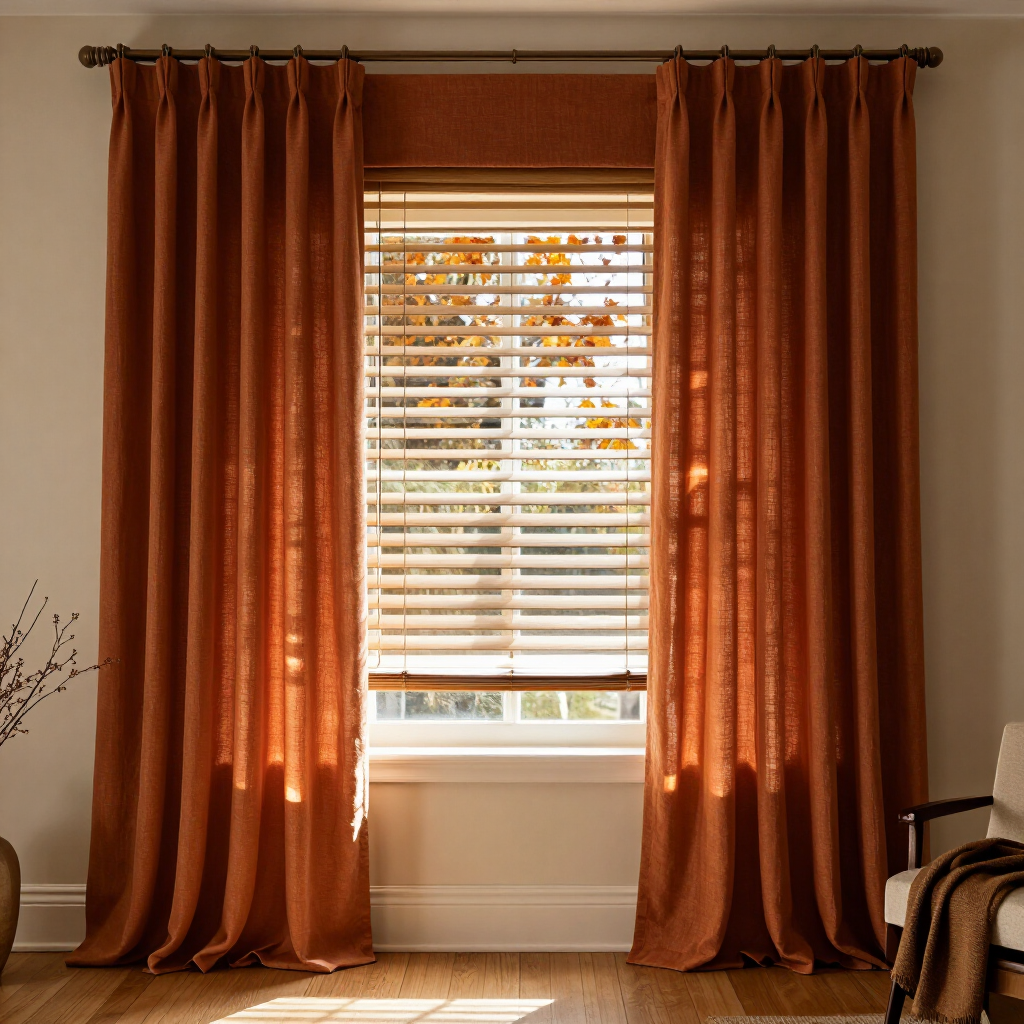
Rust-colored curtains framing a window with white blinds and autumn trees outside
By Kim Young • October 14, 2026
As the evenings draw in and the trees change to copper and gold, our thoughts naturally turn to making our homes feel warmer and more enveloping. One of the most effective ways to do this is through layering your window dressings, combining curtains, blinds and pelmets to create depth, richness and a sense of occasion that a single treatment simply can't achieve. Why Layer for Autumn? A layered window isn't just about looks; it's about function too. Autumn brings cooler mornings, unpredictable light and draughtier evenings, and layering gives you far greater control over all three. Warmth: an extra layer of fabric traps air and reduces heat loss through glass. Light control: a blind can filter low autumn sun without sacrificing privacy. Visual richness: combining textures adds a tailored, finished look no single curtain or blind can match. For period homes across Farnham, Odiham and Hartley Wintney, layering also respects the architecture; dressing a window properly, the way it was originally intended to be dressed. Starting with the Base Layer: Blinds. The foundation of a beautifully layered window is usually a well-fitted blind. A Roman blind in a warm wool-mix or textured linen sits neatly within the recess, offering precise control of light and privacy day to day. Choose tonal, muted shades this season. Rust, ochre, moss and deep terracotta all work beautifully against the low golden light of autumn afternoons. A recent client in Fleet chose a soft burnt-orange herringbone Roman blind for her study, which now glows beautifully whenever the afternoon sun streams through. Adding Curtains for Depth and Drama. Once the blind is in place, curtains bring softness, movement and a sense of luxury. Full-length, interlined curtains in a heavier fabric, think brushed cotton, wool blends or a lush velvet. These fabrics add real substance to a room as the temperatures drop. Fabric ideas for autumn curtains: Deep-pile velvet in aubergine, bottle green or burnt sienna Textured wool or bouclé for a tactile, cosy finish Warm-toned linen union for a softer, more relaxed layer Interlining is particularly worth considering this time of year. It doesn't just improve the drape and weight of a curtain, it also adds an extra thermal barrier against chilly window glass. The Finishing Touch: Pelmets. A pelmet is the detail that elevates a layered window from lovely to truly polished. It conceals the curtain heading and blind mechanism, creates a clean line across the top of the window, and adds an architectural finish that feels bespoke rather than off-the-peg. For a Camberley client with tall Victorian sash windows, we designed a box pelmet upholstered in a deep forest-green wool, edged with a subtle contrast braid. Paired with ivory Roman blinds and curtains in a complementary check, the result felt considered, warm and entirely tailored to the room. Pelmets work particularly well where: You want to hide curtain poles or blind headrails for a neater finish The window is a focal point deserving of extra detail You're working with high ceilings that benefit from a strong horizontal line Coordinating Without Overcomplicating. Layering doesn't mean everything needs to match exactly. In fact, the most elegant schemes rely on subtle contrast. Pair a plain blind with a patterned curtain, or a bold pelmet fabric with simpler curtains beneath. The key is choosing colours from the same palette so each layer feels connected rather than competing. A good rule of thumb: pick one dominant tone, one supporting neutral, and one textural accent, then let each window dressing take on a different role within that palette. Why Layering Suits Bespoke Homes. Layered window dressings are rarely off-the-shelf. Getting the proportions, headings and finishes right so the blind sits neatly behind the curtain, and the pelmet is scaled correctly to the window; This takes careful measuring and a practised eye. This is exactly where a bespoke, handmade approach makes all the difference, rather than relying on standard sizes that rarely fit period or characterful windows precisely. Ready to Layer Your Windows for Autumn? Layering curtains, blinds and pelmets is one of the most rewarding ways to bring warmth, texture and craftsmanship into your home this autumn. At Poppy Love, every layer is handmade and made-to-measure, designed to work together beautifully in homes across Camberley, Surrey, Hampshire and Berkshire. Book a home consultation and let's explore how layered window dressings could transform your rooms this season.
By Poppy Love • September 16, 2026
As September settles in and Surrey gardens turn from green to gold, many of our clients feel the pull towards richer, more layered interiors. Here's how to mix patterns with confidence this autumn.
More Posts